
Author Talks: Robison memoir roams WNY
Buffalo Literature: Deep dive into ‘The Boy From Nowhere’
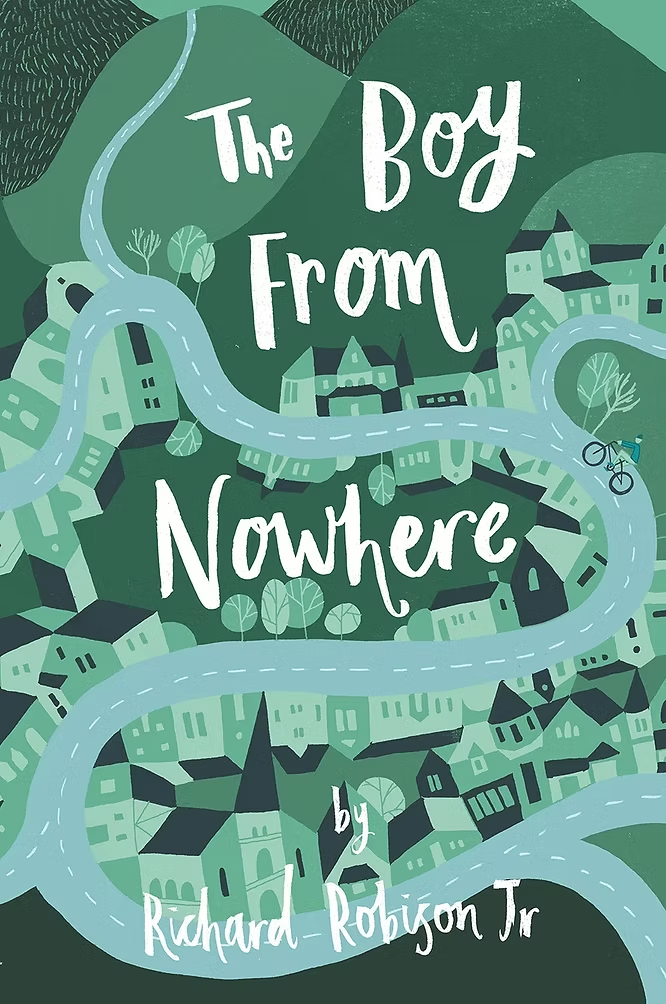
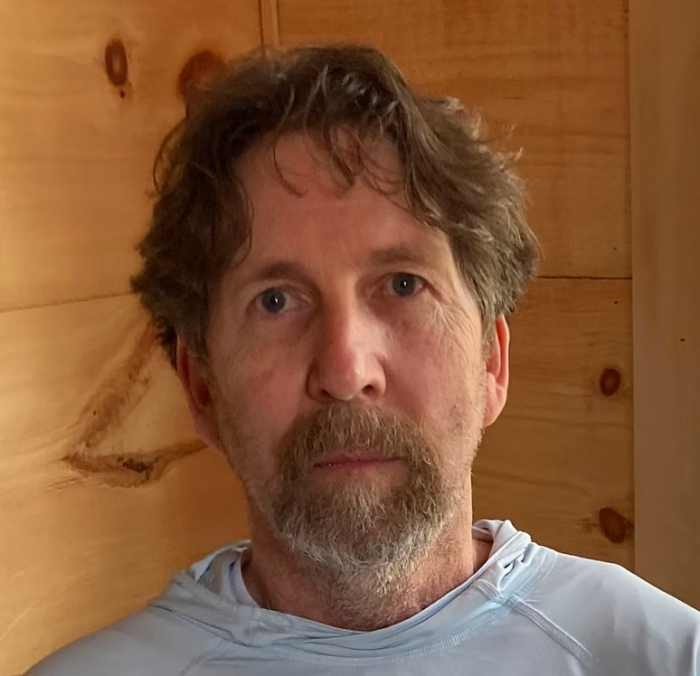
Richard Robison Jr. is a retired English professor who lives with his wife in the quaint and quirky town of East Aurora, New York. His short stories have appeared in The Roycroft Review and Spree Magazine, and his non-fiction in Cooperstown Symposium on Baseball and the American Culture. The Boy From Nowhere, released in 2023, is his debut full-length work, which vividly and sometimes heartbreakingly, chronicles his family’s numerous moves throughout Western New York in pursuit of a better, more prosperous life. Robison is this month’s featured local author.
PAK—Starting in Chapter 3, you chronicle your middle school years in Buffalo, 1961-1964. Buffalo is still pretty segregated today, but where you went to school, while there weren’t any black kids, there was a mix of Protestant, Catholic and Jewish kids. Despite being Methodist, you were friends with/had a crush on Jewish twin sisters, Rachel and Rebekah. What school and neighborhood did you live in, and did you notice any tension between kids from these different backgrounds and religions?

RR—I like that question. Even though I was pretty young, I was fairly sensitive to it. There was an enclave of duplexes right around Ben Franklin Elementary in Kenmore, and we lived in one of those. The school was on Parkhurst and my street was Claremont, one block beyond that. Nobody had fences, and nobody owned the properties. They were all rentals, so we just walked through the neighborhood unfettered. I mean, I literally crossed the street to go to school. I didn’t sense any tension at all about the different backgrounds because they were basically religious backgrounds, and we were all white kids. We all looked pretty similar, and whether you were Polish or Italian or WASP, like myself, or Jewish, no one seemed to care. I don’t remember any comments at all about that. Before Kenmore, we lived in a very Jewish community in Rochester and rented a flat from a Jewish family. My closest friends were Jewish, so I just thought nothing of it. My grandparents from central Pennsylvania, who were born at the turn of the century, would say stuff like—your Jew friends. I thought that was pretty rude. But other than that, it never was an issue.
Also, I found the religion interesting and fascinating, and I liked learning about their holidays and rituals, and sometimes going to temple with my friends. In seventh grade, all my friends were getting bar mitzvah, and I got invited to all these parties. The parents were wonderful to me. It just felt like a wonderfully engaging community, and I was drawn to that. Then our next move was to Olean, and the first girl I saw at school— it was like The Wonder Years when Kevin sees Winnie. She’s the most beautiful girl in my school. I’m 13 years old, and I just knew she was Jewish. The only Jewish girl in the school. I was just drawn to the culture in general, from when I was younger in Kenmore.
PAK—You write lucidly and with great detail about your elementary school years. By the time you were twelve, you spent a fair amount of time in Rochester, Buffalo and Olean, plus with your grandparents in Central Pennsylvania. What were the differences in character, culture and way of life between those places?
RR—Night and day, you know, the differences. I spent three years living in the Kenmore School District, fully engaged in the culture, the school, the environment, Little League baseball, and all this kind of stuff. Then we moved to Olean, and it felt so old-fashioned to me. It was a town in 1964 that still felt like it was in the Depression, like the Depression never left it. There was a black community in Olean, but they lived on the far side of town in a very small segregated area. But the town was very blue-collar, hard scramble, hard-ass. Racist and ignorant too. I’m not sure this is the right term, but it was a place that had no aspirations whatsoever. I mean, there were some people that did, but on the whole, no aspiration at all. They were just putting in time, and they were embittered. I had some good teachers. I had some blah teachers. Students just coasted. Some didn’t. I suppose, but I didn’t really have to do much of anything to be like the top kid in my class. I came in from a much better school district, and these kids just didn’t care. It was a shock. I did have a friend, the aforementioned Jewish girl whose dad was a doctor. I remember asking what kind of doctor he was. It turned out he was a pathologist and did autopsies at the hospital. So there was that. But you know, most of them were just hardcore. They wore those work clothes, Dickies’ work clothes, matching green and green pants or blue and blue pants.
This bleeds into another question you asked, but it was all about being the Alpha. It’s the only thing they had. Not all, but many of these guys achieved status by having physical power. It wasn’t going to be intellectual. It wasn’t going to be educational. It wasn’t going to be a job that made them stand out. And when a sought-after girl was involved, that especially raised the Alpha in them even higher.
Then in Pennsylvania, it was really like going back into the depression for sure. Those people in this little community were 12 miles from State College, where Penn State is, but it may as well have been in Iowa or Mississippi, and it was incredibly racist. People like my grandfather had one of the best jobs in town because he worked for the power company. He had benefits. He had a retirement. Other people in town, like my friend across the street from my grandparents, his dad was a janitor somewhere at the college. Everyone who worked at the college was a service worker. So Olean was a big upgrade from central Pennsylvania. It was dramatic. Then, going from Olean to Hamburg was just as dramatic—suburban schools, excellent community.
PAK—As mentioned, you write lucidly and with great detail about your youth. Did you keep a journal through those years?
RR—Oddly enough, no. I think there were times in high school when we were maybe even required to keep a journal in some of my English classes, but that was in Hamburg. I don’t remember any details about what I included. I know I kept one in college for my graduate work. One of my professors had us keep journals about our education, but not our personal lives. But I remember my interest in one in seventh grade, reading Tom Sawyer. My seventh-grade teacher gave us an assignment to write a diary entry like in Tom Sawyer, and I thought the idea of a diary was interesting, but I’ve never really kept one.
PAK—You exhibit a strong moral core from an early age. You question your grandmother Hazel when she shares gossip about a girl you met at a carnival, Marilyn, who has trouble because it’s rumored her father might be black; you call out Rowdy for indiscriminately shooting at birds with his BB gun. Given that the adults in your life weren’t particularly communicative, where did this sense of right and wrong come from?
RR—Yeah, that was the best question I’ve ever been asked. And I was telling my wife about this last night, cleaning up after dinner. “She goes, What do you think it was?” And I said, “You know, I’m not really sure.” Despite the detachment in my family, there was a sense of accountability. If I screwed up, I was punished, and they explained to me why, even if I didn’t know why. And we had things called manners. When we went to my grandmother’s house, I took off my baseball hat when we ate dinner. You know, all these kinds of things. That was a deep part of my upbringing: understanding rules and accountability. But I think how that comes through in the book is more because I moved all the time. I was an outsider virtually my whole childhood and adolescence. I was the outsider kid, and knew what it felt like to not be included or to be picked on, as was the case in Olean. I think it came from that. It’s like this is not right.
I thought of something else this morning, and it ties in with one of your other questions. I read a book when I was maybe 17 or 18—The Eddie Rickenbacker story. My mom was in a Book of the Month Club, and it was on our bookshelf. So one rainy afternoon I picked it up, and Rickenbacker was a World War I fighter pilot, like the Red Baron. I started reading, and it was interesting. He talks about the armistice on 11/11 at 11 am in 1918. And he was doing reconnaissance over No Man’s Land at 10:30-10:45 a.m., but everyone knew the war was over at 11. But if someone went into No Man’s Land at 1045 they would be shot. But the sirens went off to announce it was 11 o’clock, and the men came out of their trenches from each side and embraced in No Man’s Land. I thought, this is crazy. You know, you ask yourself why these people are even fighting—over someone else’s belief or some political belief? It made no sense. Where was their sense of individual thought in this? It had a huge impact on me. It convinced me to never join the military, and never go to war. I wasn’t going to be part of politicians’ gangs. This was when the Vietnam War was going on. So that’s 1968 and it was in the papers every day. And I think when I read that in his book, I was like, “not me. That’s not going to be me.” So it was war and a general sense of accountability.
PAK—You recount the story of a classmate dying while fighting with a bully, and on several different occasions you mention the stupidity of boys fighting. In 8th grade, when a kid you don’t even know targets you for a fight you refuse to even entertain the idea of fighting. You say, “I would fight if I had to, for the right reason, but this fight had no reason other than his need to establish some kind of alpha position. The rash of fighting… was over nothing more than a recognition of manhood that would otherwise be denied them.” That’s some pretty high-brow stuff for an 8th grader in 1964. Where did that insight come from at such a young age?
RR—Well, I don’t know that I saw it that way in 1964, but I’m writing it as a seventy-year-old man. Looking back, that’s clearly what it was. And I also remember I had a really good history teacher, and I remember him talking about the Civil War, and because it was American history, and freeing of the slaves and all this. He was saying that, in the culture, this was pretty advanced for the time. He said, “Why, why do black people behave this way compared to white people? Obviously, because the black people can’t buy a house, they got shitty jobs, and as slaves, they had no way of separating and creating status within the group except through masculinity for the males.” And I thought back to that. It’s like I know that I somehow extrapolated that probably subconsciously, but I wasn’t aware of until later in life that this was just all about status. Where do I get my status? Who’s my girlfriend? Who’s not? Who did I fight for? Who’s the girl I’m fighting for? That whole Cinderella complex thing, but that’s mostly a looking-back-on-it kind of thing. At the time, it was in part because it just seemed so stupid to me. And I said to myself this is not going to happen to me.
PAK—With so much of your childhood shaped by your father’s career moves, how much did you understand what was driving those decisions? What made him so driven to succeed? Did you ever have conversations with him about his professional ambitions and how they fit into a larger plan? Was this something you watched unfold from the sidelines, or did he make a point of bringing you along for the ride?
RR—That’s another great question. No one’s ever brought that up either. We never had a sit-down discussion about this. It was always just imposed upon me from a very early age. I think in the book I talk about when I was a baby, and we lived in State College. My dad worked at the college as a baker. So he was 20 years old, and I remember him telling me, we were living in an apartment above a pizzeria in downtown State College. My dad was walking across the campus, and he would see guys his age, and back then they wore suits, going to class. They were going to make something of their lives, just because of privilege. And he went there and baked their bread. And he told me many times as I was growing up, “You will not bake their bread; you’ll be one of them.” So that was sort of an elliptical way of saying that I was going to become one of them too. His goal was not to be the bread baker. To be the bread taker. And so he was driven to prove himself. His family didn’t support him going to college. It wasn’t like today where anyone can go to school. Now it’s getting expensive, even in public schools. It didn’t used to be. My most expensive semester at Buffalo State was $150.
So my dad’s thing was, and it was made clear to me by my mother too, when I would say, “Well, I don’t want to move. Why are we moving?” She would say, “Because your dad got a better job.” And, I wondered, how is that helping me? And without saying it directly, the answer would be that the family will benefit from this; we will live a better life. We will have better income, better status. We’ll own a home. We’ll do all these things. So it was just spoken, but obliquely, all the time. It was a message from my earliest memories.
PAK—Your narrative contains highly descriptive details of architecture, furniture, paintings, lamps, globes etc. Where did you get an eye for such detail?
RR—Because we lived in a lot of different kinds of houses. I think that was part of it. And every time we moved, it was like, “Where are we going to move? What’s it going to be like?” I started this in Rochester, but before that, we lived in Warsaw for a couple of years. We lived in Leroy when I was in kindergarten and first grade, and we lived in what was a one-room schoolhouse converted into a house. Then when we moved to Warsaw, we lived in a Victorian house that was three stories, two porches and five fireplaces. It was split into a duplex. There was so much room. And I remember just going through the building and thinking, “This is awesome.” Pocket doors and all this stuff. There was an upstairs porch—are you kidding me! So I think it was just from living in different places and the different groups of friends I met over time that exposed me to different lifestyles. The Jewish family across the street from me had the Oriental rugs. I remember these rugs, and was like “They’re awesome.” The piano, and a chess set. Yeah, all that stuff. I think that was part of it. And my mother was always really good at making where we lived a home and a place you’d be proud to bring your friends. She was always reorganizing furniture. She would have been a great Home Goods worker, had there been one then. She was always redecorating. She had a really good eye for it, and I think every place we went into that was rented, my mother always redid it, and my dad, the two of them, repainted everything, and decorated it.
PAK—You write vividly and heartbreakingly about your father’s drinking and the violence he inflicted on your mother. You say after a particularly bad night where you hit your father with a baseball bat to stop him from hurting your mother that you escaped to a Holiday Inn for the night with police help. In the morning, your parents reconciled and dealt with it by pretending it didn’t happen. How did that incident affect you going forward with your parents and your own relationships?
RR—Well, that’s the heart of this book. It’s the single most powerful moment in my life because I thought I’d killed my dad, and I didn’t feel bad about it. That’s what was frightening. And I knew my mother wouldn’t leave him before that because they’d worked so hard to reach the material life at the expense of their souls, without thinking what it did to us. I had two sisters, but I didn’t put them in the room. Because one is deceased. She died about 18 years ago. She had ALS, and we weren’t very close. And my younger sister, whom I was close with—she knew I was writing this book, and when it was getting published, I had to tell her she wasn’t in it. She asked why, and I said, “Because I didn’t want you to have to answer for any of this, and I didn’t feel it was right for me to try to explain what you felt about it or to interview you.” Then it becomes a much bigger book. I said it’s my story. That was all. But I think also, as an only son, I had different expectations on me, and I felt an awful lot like an only child. So it was pretty easy to write that way.
How did that affect me, though? I lost respect for both of my parents. My dad would stop drinking. The only outward thing spoken about the violence was, “I will never do that again.” Yet he’d drink again, and they’d have an argument, but he was never physical after that, nor was my mother. I knew he was repentant, but I didn’t trust him. He spent the rest of his life trying to make amends for that night. And my mother didn’t accept it. They stayed together forever, but my mom died bitter. Even when my father was alive. She was just nasty to him. My dad would always try to atone, and she just wouldn’t let him.
And so, how did all that affect me? It was like losing trust in both of them, being angry with both of them, and trying to understand why this happened. How could you live like that? And knowing all this I would not let myself live that way. Then I got married when I was 25, almost 26, to my first wife. We lived together for a couple of years before we got married, and you know, it didn’t work. There were complexities that affected my ability to be vulnerable with anybody. She remarried, and I remarried years later. She also lives in East Aurora, and when I wrote the book and gave her a signed copy, I told her not to read it. But she did and wanted to talk about it. Though she lives about a block away from me, I never see her in town. I went to her house and had tea and banana bread, and she just said, “Oh my God, this book is beautiful.” So I immediately relaxed because I thought she was going to complain about something. We both agreed our childhoods were bad, but mine in particular. It prevented me from being able to connect with people, male or female. I had a good group of friends in high school for sure, but it took a while to get there. And with girls, with women, it was really really hard. And when my first wife and I were in marriage counseling, and I’m giving my family history to my counselor goes, “I’m amazed you’re as normal as you are.” So yeah, it affected me. It affected every aspect of my life for a long, long time.
PAK—What advice would you have for readers considering writing a memoir, and are there any memoirs or authors that specifically prompted or influenced you to write A Boy From Nowhere
RR—My advice to anyone who wants to write a memoir is to tell the truth and be vulnerable, and the story will emerge. When I wrote The Boy from Nowhere, it started out to be a short story. I wasn’t intending to write a book. I was going to make a fictionalized version of the frog-shooting scene from the book, which appears in the middle. It branched in two directions from there. But I was going to start with a really vulnerable moment in my life that I was going to fictionalize, and I said, “No, it has to be truthful.” So I would say, truth and vulnerability go hand in hand.
Some of the memoirs I love the best are Tobias Wolff, This Boy’s Life; Tara Westover, Educated; Jeannette Walls, The Glass Castle. The Tobias Wolf is wonderful and highly readable
PAK—Was writing your story in any way cathartic or provide you with greater understanding of past events?
RR—Both. Yeah, like the part about seeing the guys fight to be Alpha was really evident to me as a seven-year-old. Some of this I wrote when I was in graduate school in ’82, ’83. But I didn’t write it as well, and I didn’t try to get published but the stories were there. I wrote the whole thing, building up to that night when we escaped to the Holiday Inn, which had to be in the book. So yeah, the whole experience was cathartic for sure. In ways, I thought I was beyond it and understood it, but I think I got a deeper feeling for what I’ve gone through by writing this. I also thought that if I had written it earlier, I wouldn’t have had the right perspective or insight into how it affected us. My younger sister, who lives in Florida, came for the launch, and she agreed when she read the book.
PAK—What’s next in the way of new writing projects?
RR—I’ve completed a novel that’s in search of an agent/publisher. I’ve been shopping it for over the past year. It’s called Letters to Genevieve. I wrote it while I was waiting for this book to come out, and I’ve gotten good feedback from a group of readers. I’m waiting on a few agents who seemed really interested. I’m now working on a third one, which I’m about halfway done. The title is Don’t Stand So Close to Me. It’s about a teacher and a15-year-old boy, and I’ll leave it at that.

Related Posts


